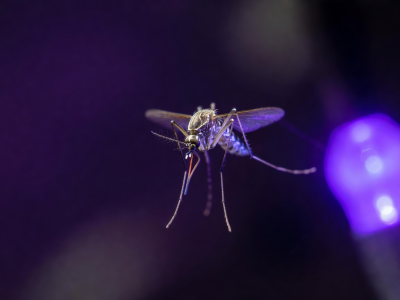
The Complex Biology of Mosquito Attraction
When discussing electric insect traps, mosquitoes represent a unique and challenging target. While many flying insects, such as moths and various fly species, exhibit intense positive phototaxis—meaning they are overwhelmingly driven to navigate toward light sources—the relationship between mosquitoes and ultraviolet light is significantly more nuanced. Understanding this biological distinction is crucial for deploying a trap that actually reduces the local mosquito population rather than simply illuminating the yard.
A standard UV light will attract a percentage of mosquitoes, particularly those that are not actively hunting for a blood meal. The specific wavelength that yields the highest response from these insects is in the near-ultraviolet spectrum, heavily concentrated around 365 nanometers. At this wavelength, the light interacts with the mosquitoes' visual receptors, triggering a navigational response.
The Hierarchy of Senses
The core challenge in mosquito control is that a hunting female mosquito (the only ones that bite) prioritizes olfactory and thermal cues over visual ones. If a female mosquito must choose between a bright 365nm UV beacon and a human emitting carbon dioxide, heat, and lactic acid, she will invariably veer toward the human. Light is a navigational aid; humans are dinner.
Because of this sensory hierarchy, standalone UV traps—especially those placed directly in seating areas—often perform poorly as mosquito shields. They intercept the casual flying insects while the actively hunting mosquitoes bypass the trap in favor of the human targets nearby.
Synergizing UV with Secondary Attractants
To transform a basic UV trap into a highly effective mosquito killer, manufacturers engineer hybrid systems that exploit the mosquito's olfactory system. By combining the 365nm visual lure with chemical attractants, the trap simulates a living, breathing host.
- Octenol (1-Octen-3-ol): Often referred to as "mushroom alcohol," this organic compound is found in human breath and sweat. When released in slow-dissolving cartridges near the UV light, octenol acts as a powerful chemical lure for many biting insect species, particularly certain mosquitoes and biting midges (no-see-ums).
- Carbon Dioxide (CO2): The absolute gold standard for mosquito attraction. Some advanced traps generate localized plumes of CO2 through the catalytic conversion of propane, or through the photocatalytic reaction of UV light hitting a titanium dioxide (TiO2) coated surface on the trap's housing. The combination of CO2 and UV light creates an almost irresistible multi-sensory lure.
Suction Mechanisms vs. Electrocution
Once the mosquito is drawn within range of the trap via UV light and chemical lures, how is it captured? While traditional high-voltage grids work, mosquitoes are fragile, low-mass insects that are easily caught by alternative, quieter means. Many modern mosquito-specific traps utilize a strong, localized downdraft created by an internal fan.
When the mosquito approaches the UV bulb to investigate the chemical plume, the vacuum action of the fan pulls the insect downward into a retention cage or a sticky glue card. If pulled into a cage, the continuous airflow rapidly dehydrates and kills the mosquito. This method provides several advantages over high-voltage grids:
- Silence: No disruptive "zapping" sounds, making them ideal for quiet patios and indoor use.
- Hygiene: No insect fragmentation or aerosolized particles.
- Intact Catch Monitoring: The dehydration chamber allows users to clearly identify the species of mosquitoes being caught, which can be useful for assessing local disease vectors (e.g., Aedes aegypti vs. Culex pipiens).
Best Practices for Mosquito Trapping
To maximize the efficacy of a UV mosquito trap, deploy it early in the season—ideally before the first major hatch. Place the trap between the source of the mosquitoes (like standing water, dense vegetation, or marshy borders) and your living area. Ensure the trap is positioned in a shaded area, out of competing ambient light, and always remember to replace octenol or attractant cartridges according to the manufacturer's schedule, as UV light alone will yield diminishing returns once the chemical lure is exhausted.