The Reality of UV-A Degradation
The most common and critical failure point in electric insect trap operation is not mechanical breakdown, but optical degradation. A trap's ability to pull insects from the surrounding environment relies entirely on the output of its ultraviolet (UV-A) bulbs. Unfortunately, human eyes are a terrible judge of a UV bulb's efficacy. A tube that appears to be glowing a bright, healthy blue may actually be emitting virtually zero insect-attracting ultraviolet radiation.
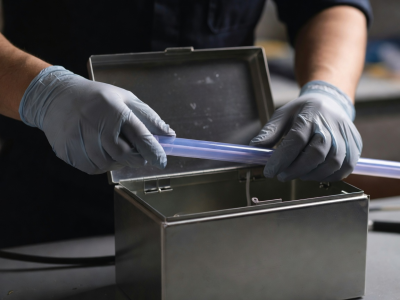
Fluorescent UV tubes rely on an internal phosphor coating to convert electrical energy into UV light. Over time, this phosphor degrades. On average, a standard UV-A fluorescent tube loses approximately 50% of its effective ultraviolet output after 8,000 to 9,000 hours of continuous use—roughly equal to one year of constant 24/7 operation.
To maintain a protective perimeter, facility managers and homeowners must adopt a strict annual replacement schedule for all fluorescent UV bulbs, typically at the beginning of the spring pest season. Delaying replacement means paying electricity for a trap that acts merely as a dim nightlight, utterly ignored by local insect populations. Modern LED UV arrays have significantly extended lifespans, often rated for 20,000 hours or more, but they too eventually experience diode degradation and require module replacement.
Cleaning the Electrified Grid
For units employing high-voltage killing grids, routine debridement is essential. Even with high-wattage transformers designed to vaporize small pests, larger insects (like June bugs or large moths) can become lodged between the electrified wires. As dead insects accumulate, they create conductive bridges across the grid.
When this happens, you may hear a continuous arcing or buzzing sound, or the grid may short out entirely, neutralizing the trap's killing power and placing severe strain on the internal transformer. To clean the grid safely, follow these protocols:
- Complete Isolation: Never rely solely on an integrated power switch. Unplug the unit entirely from the mains outlet before attempting any maintenance.
- Discharge the Grid: High-voltage capacitors can hold a charge even after the unit is unplugged. Use an insulated screwdriver with a high-voltage handle to briefly cross two of the inner grid wires. You may hear a sharp "crack" as the residual energy is discharged.
- Brush Debridement: Do not use water or metal tools on the inner grid. Use a stiff-bristled, non-conductive nylon brush (often provided by the manufacturer) to dislodge adhered insect matter. Use compressed air to blow out fine dust and debris from the ceramic insulators located at the top and bottom of the grid assembly.
Starter Replacements and Glue Boards
For older fluorescent models that do not utilize modern electronic ballasts, the fluorescent starter is a small cylindrical component that provides the initial voltage surge to light the tube. As a general rule, if you are replacing the fluorescent tube on a magnetically ballasted unit, replace the starter simultaneously. A degraded starter can ruin a brand-new UV bulb in a matter of weeks by failing to provide smooth ignition.
For commercial glue board systems, maintenance schedules are dictated by the environment. In a standard office, a glue board might remain effective for 6 to 8 weeks. In a high-pressure environment like a commercial kitchen or a bakery in mid-summer, the board may become entirely coated in dust, flour, or captured flies within two weeks. Once a glue board's surface area is compromised, insects will simply land and walk off. Regular visual inspections are mandatory to ensure the adhesive remains tacky and exposed.
Consistent maintenance transforms an electric insect trap from a neglected piece of background hardware into an active, highly efficient line of defense against disease vectors and nuisance pests.