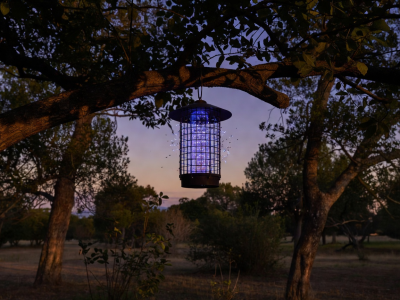
Defending Exterior Spaces
The outdoor bug zapper is the heavy artillery of the electric pest control world. Designed to cover vast areas ranging from a quarter-acre to upwards of an acre and a half, these units operate in highly variable environmental conditions. Unlike indoor traps that manage localized, contained populations, outdoor zappers must emit an intensely bright ultraviolet beacon capable of penetrating darkness, foliage, and atmospheric moisture to attract insects from significant distances.
To achieve this, outdoor models require robust construction, high-wattage UV output (often 40 watts or higher), and heavily reinforced electrified grids capable of neutralizing thousands of insects per night without clogging or short-circuiting.
Grid Voltage and Interception Capacity
The defining feature of an outdoor zapper is its high-voltage killing grid. Because outdoor units encounter larger, more robust insects—such as large moths, beetles, and heavy flies—the electrical discharge must be powerful enough to achieve instantaneous destruction. Most premium outdoor units step up standard mains electricity through an internal transformer to produce grid voltages between 3000V and 4500V.
A critical engineering consideration for these grids is self-cleaning functionality. If the voltage is too low, large insects may only be stunned or partially destroyed, adhering to the metal wire. When multiple insects bridge the gap, the grid can short out, rendering the trap useless until manually cleaned. High-voltage transformers prevent this by literally vaporizing small-to-medium insects, ensuring the grid remains open and functional throughout the night.
Weather Resistance and IP Ratings
Operating outdoors means exposure to rain, sprinkler systems, high humidity, and dust. A standard indoor electrical appliance would pose a severe electrocution hazard under these conditions. Therefore, outdoor bug zappers must possess specific Ingress Protection (IP) ratings.
An IP rating consists of two numbers: the first indicates resistance to solid objects (like dust), and the second indicates resistance to liquids. For a bug zapper to be safely deployed in an exposed outdoor environment, it should carry a minimum rating of IPX4, indicating protection against splashing water from any direction. Heavy-duty units may feature IPX5 ratings, allowing them to withstand low-pressure water jets. These ratings are achieved through hermetically sealed transformers, waterproof housing around electrical connections, and specially designed rain guards protecting the bulb sockets.
The Strategy of Placement: Drawing Them Away
The most common mistake consumers make with outdoor bug zappers is placing the unit directly adjacent to the area they are trying to protect, such as hanging it immediately over a patio dining table. This creates a counterproductive scenario: you are actively drawing every phototactic insect in the vicinity directly toward the people you wish to shield.
The correct strategy is one of interception and diversion. Follow these placement protocols for optimal outdoor coverage:
- Distance: Hang the zapper 20 to 30 feet away from human activity zones (patios, pools, decks). The goal is to draw pests out of your living space and toward the perimeter of the property.
- Elevation: Suspend the unit 6 to 8 feet off the ground. This elevation clears most ground-level obstacles, allowing the UV light to radiate outward across the maximum possible radius, and intercepts the natural flight path of many flying pests.
- Light Competition: Position the unit away from competing light sources. A zapper placed directly next to a bright LED floodlight will suffer severely reduced effectiveness, as the insects' visual receptors become flooded by the competing illumination.
Ecological Considerations
It is important to acknowledge that non-specific UV light attracts a wide spectrum of insects, not just nuisance pests. Outdoor bug zappers will inevitably collect bycatch, including benign or beneficial insects like certain moths and beetles. To mitigate ecological impact, use outdoor zappers judiciously—turning them on only during periods of outdoor human activity or utilizing built-in dusk-to-dawn sensors to limit their operational hours.