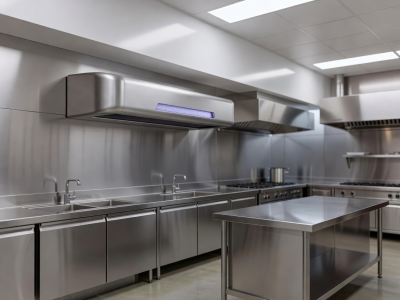
The Imperative of Commercial Pest Management
In residential settings, a flying insect is a nuisance; in commercial environments—particularly food processing, pharmaceuticals, and hospitality—a flying insect is a critical contamination vector. The presence of just a few house flies (Musca domestica) can lead to health code violations, compromised product integrity, and severe damage to brand reputation. Consequently, commercial fly control systems are heavily regulated and radically different from the standard bug zappers sold in hardware stores.
Commercial facilities must adhere strictly to Hazard Analysis and Critical Control Points (HACCP) principles. Under these protocols, the method of pest elimination must not itself become a source of contamination. This fundamental requirement dictates the design architecture of all professional-grade electric fly killers (EFKs).
Why Traditional Zappers Fail in Commercial Kitchens
The defining feature of a traditional bug zapper is the high-voltage electrified grid. While highly effective at killing, the electrocution process generates significant kinetic energy. As moisture inside the insect's body rapidly boils and expands, the insect often explodes. This aerosolizes insect fragments, pathogens, and bacteria, scattering them over a radius that can easily reach nearby food preparation surfaces.
Because of this fragmentation hazard, grid-style zappers are strictly prohibited in commercial kitchens, directly above processing lines, or in pharmaceutical cleanrooms. Instead, the industry relies exclusively on sophisticated glue board technology.
Glue Board Technology and Analysis
Commercial fly control units use precisely calibrated UV-A lamps (often multiple 15w to 40w tubes to maximize coverage) to attract insects into the housing. Once inside, the insects land on a large, pheromone-impregnated sticky board positioned behind the bulbs. The benefits of this system are multi-fold:
- Total Containment: The insect is captured whole. There is no fragmentation, no airborne bacteria, and no audible "zap" to disturb restaurant patrons.
- Aesthetic Discretion: Modern commercial units are designed as elegant wall sconces. The glue board and the captured insects are hidden behind an opaque, decorative shield, meaning customers in a dining room are completely unaware that pest control is taking place.
- Data Collection: In a commercial setting, a trap isn't just a killer; it's a monitoring device. Pest control professionals routinely examine the intact insects on the glue boards to identify species, track population spikes, and locate potential breeding sites within the facility.
Shatterproof Bulbs: A Mandatory Safety Standard
Another critical requirement for commercial fly control is the use of shatterproof UV bulbs. In the fast-paced environment of a commercial kitchen or loading dock, equipment can be bumped, or bulbs can break during routine replacement. Standard glass tubes would scatter dangerous shards across the floor and into production lines.
To prevent this, commercial UV bulbs are coated in a specialized fluoropolymer (like FEP or Teflon). If the glass envelope shatters, the tough outer coating contains all the glass shards and toxic phosphors within a secure sleeve, allowing the broken bulb to be safely removed and discarded without initiating a costly production shutdown or product recall.
Strategic Installation for Compliance
Proper placement of commercial units is rigorously audited by health inspectors. Best practices dictate that units should never be placed directly above open food, preparation tables, or packaging lines, even if they utilize glue boards. Instead, they should be wall-mounted at a height of approximately 2 meters (6.5 feet)—optimizing interception of the typical fly flight path—and positioned at 90 degrees to windows to prevent the UV light from competing directly with the sun or attracting insects from outside the building.
By integrating high-efficiency UV attraction, secure glue board retention, and shatterproof safety components, commercial fly control systems provide the silent, hygienic, and verifiable pest management required by modern industry standards.